
Pick-up
Coordinate free equipment or component pick-up when applicable.
Diagnostic guide · Fontana, CA
Hydraulic leaks are information. Where the oil appears, when it appears, and what the machine does while it leaks tells a practiced eye which component is failing and how far the damage has gone. This guide covers the leaks we diagnose daily at our Fontana shop — and the point where a leak stops being a seal job and becomes a rebuild.
Diagnostic guide · Fontana, CA
Oil at a cylinder rod means the gland area — rod surface condition, gland fit and seal state, in that order of importance. Oil at fittings and hoses is usually mechanical: chafed hose, loose or damaged fitting faces, wrong flare or O-ring. Oil at a pump or motor shaft seal often means case pressure or a worn shaft surface, not just an old seal — replacing the seal without the cause schedules the same leak again.
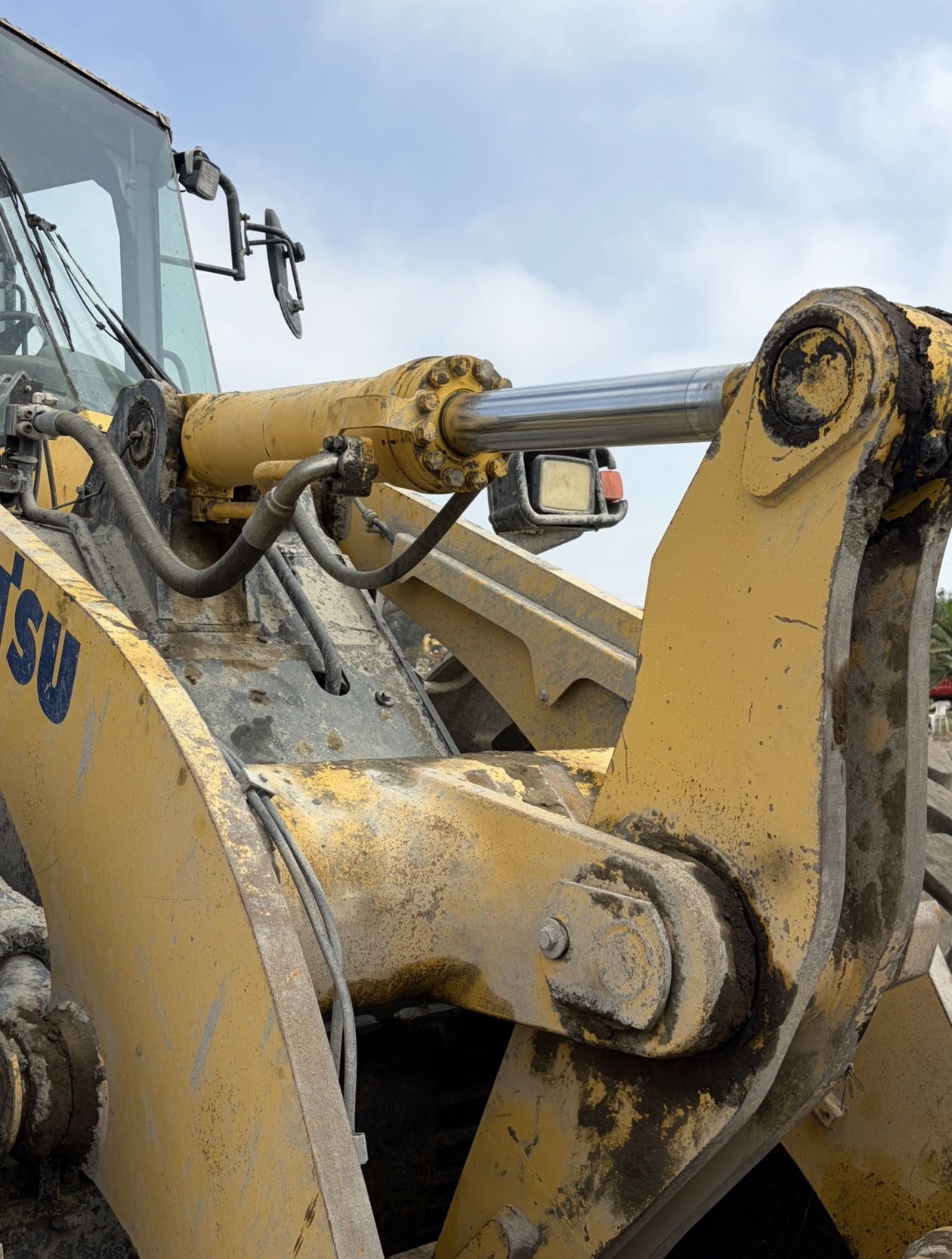 Hydraulic Leak Diagnosis Guide · Fontana, CA
No puddle, but the boom drifts, the bucket curls open, or the machine weakens as it warms up — that is internal bypass: cylinder piston seals, a worn valve spool, or pump wear passing oil where it does no work. A simple drift test and a flow/pressure check separate cylinder from valve from pump, which is why diagnosis comes before parts.
The contamination spiral is the part nobody budgets for: a wearing component sheds metal, the metal scores everything downstream, and a one-component failure becomes a system rebuild. Clean oil and early attention are the cheapest hydraulic insurance there is.
A clear path from the first call to a tested component or machine returned to work.
Coordinate free equipment or component pick-up when applicable.
Disassemble and evaluate the complete failure.
Document condition and findings for a clear repair conversation.
Define the recommended work and quote before proceeding.
Confirm scope, urgency and the practical path forward.
Machine, weld, rebuild or reverse engineer required components.
Verify operation and workmanship before release.
Return the completed component or equipment to service.
Small external seeps are a scheduling problem; active leaks, drift under load, or metal in the oil are stop-and-inspect problems. When in doubt, call and describe it — that conversation is free.
Heat thins the oil and pressure opens marginal seals and fits. A leak that appears under load is diagnostic gold — it tells us exactly which circuit to test hot.
Schedule service or open a repair order
Include the make, model, symptoms, location, urgency and preferred service time. Your details open in a text to John so you can review them before sending.